Beginning October 27,you will be required to input the pin/password associated with your general library account to accessLibby (Overdrive) and Kanopy. If you need help with your password, please email circdesk@dppl.org or call 847-376-2788.
Emi Muñoz Bonilla is a Puerto Rican poet whose work stems from a life shaped by love, dreams, and experiences that leave a lasting mark on the heart.
From a young age, she developed a special sensitivity to the world of emotions. She learned to observe love in its various forms: platonic love, dreamed-of love, learned love, and lived love. Over time, she discovered that poetry was her way of understanding her feelings and giving voice to what she carried within.
Her journey as a poet began at fifteen, sparked by an impossible love—one that never became reality, yet felt entirely real to her. Her poetry was born from that dream.
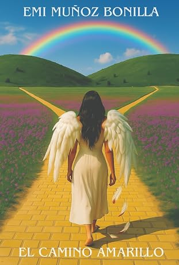
Her poems reflect the experiences, emotions, and lessons that accompanied her as she grew up. From that journey came El Camino Amarillo (The Yellow Road), an emotional map of the feelings she experienced throughout her life.
Her poetry explores love with an honest and reflective gaze, acknowledging both its beauty and its contradictions. In her verses, she speaks of dreams, hopes, losses, and—above all—the importance of learning to recognize when loving also means letting go.
Her purpose is to leave a mark of her time on this planet and to build, through her poems, a legacy of love for other hearts.
Because some love stories were not meant to be lived; they were meant to become poetry.
I began writing at the age of fifteen, after falling for someone with whom a relationship was impossible. Since that love could not be reciprocated, I wrote poems and left them in their mailbox for them to read. At one point, I revealed my identity, but my feelings were not returned. Although I continued writing for that impossible love, I never gave them the poems again.
Nowadays, I write poetry as a form of therapy to help me survive; I turn my pain into verse. However, my poems aren't just about sadness; they also speak of passionate, romantic love.
2. When you speak of "silences that speak," what exactly do you mean? Was there a specific moment that inspired this idea?
Silence is also a response, even if it isn't the one we hope for. The inspiration for this thought came when I was waiting for an answer to a question, but that answer never arrived. Only silence kept me company.
3. Your book includes sections dedicated to the different seasons. What led you to focus on seasons?
I focused on the seasons of the year because they allow us to observe the stages of love, leading up to the spring we all seek. I have always loved comparing love to the power of nature.
4. Do you plan to publish the book in English? Are you working on any other projects?
I am currently working on several projects. I am translating my poems into English so that more people can experience the healing power of poetry. This project is very important to me because I don’t want to simply produce a translation; I want to ensure the feeling that inspired the poems isn't lost, so I have to be very careful.
Another project involves adapting the lyrics of my poems into beautiful songs that I will soon share on my YouTube channel. I’ll be exploring a variety of musical genres, and I’m even including a song in Italian.
5. For those who haven’t read your book yet, is there anything you’d like to share to inspire them? Is there a particular message you hope readers take away from it?
Art is therapy. Whether it’s writing, drawing, singing, photography, or anything else, art is a powerful, positive tool. We shouldn't bottle up our pain.
The message I want to convey to my readers is that life can be painted in every color. And, as Trent Shelton once said: "We’re all a little broken. But last time I checked, broken crayons still color the same."
Even though we all carry scars inside, life can still be beautiful. My poems speak precisely to that transformation—turning pain into something that can also be beautiful.
Join us at the Des Plaines Public library for our Spanish book club: Cafecito y Libritos
Our next meeting is September 26th! Please register if you are interested as there are limited spaces. Copies of the book are available at the 3rd floor desk!
(Este libro también fue seleccionado para nuestro club de lectura en Español este Septiembre. Encontrarás más información más abajo!)
Sobre la autora y su libro:
Emi Muñoz Bonilla: una vida escrita desde el corazón
Emi Muñoz Bonilla es una poeta puertorriqueña cuya obra nace de una vida marcada por el amor, los sueños y las experiencias que dejan huella en el corazón.
Desde muy joven desarrolló una sensibilidad especial hacia el mundo de las emociones. Aprendió a observar el amor en sus distintas formas: el amor platónico, el amor soñado, el amor aprendido y el amor vivido. Con el tiempo descubrió que la poesía era su manera de comprender lo que sentía y de dar palabras a aquello que llevaba dentro.
Su camino como poeta comenzó a los quince años, a raíz de un amor imposible… uno que nunca llegó a ser real, pero que ella sintió como si lo fuera. De aquella ilusión nació su poesía.
Sus poemas son un reflejo de las experiencias, emociones y aprendizajes que la acompañaron mientras crecía. De ese recorrido nació El Camino Amarillo, un mapa emocional de lo que fue sintiendo a lo largo de su vida.
Su poesía explora el amor desde una mirada honesta y reflexiva, reconociendo tanto su belleza como sus contradicciones. En sus versos habla de los sueños, las ilusiones, las pérdidas y, sobre todo, de la importancia de aprender a reconocer cuándo amar también significa dejar ir.
Su propósito es dejar una huella de su paso por este planeta y construir, a través de sus poemas, un legado de amor para otros corazones.
Porque algunas historias de amor no fueron hechas para vivirse; fueron hechas para convertirse en poesía.
Comencé a escribir a los quince años de edad, tras ilusionarme con un amor imposible. Ya que ese amor no podía ser correspondido, le escribí poemas que dejaba en su buzón para que los leyera. En cierto momento le revelé mi identidad, pero no fui correspondida. Aunque continué escribiendo para ese amor imposible, jamás volví a entregarle los poemas.
En la actualidad, escribo mis poemas como una terapia para poder sobrevivir. Así que convierto mi dolor en poesía. Pero mis poemas no solo tratan de tristeza; también hablan de un amor apasionado y romántico.
2. Cuando hablas de «los silencios que hablan», a qué te refieres exactamente? Hay algún momento concreto que te haya inspirado esa idea?
El silencio también es una respuesta, aunque no sea la que esperamos. La inspiración de este pensamiento surgió cuando me quedé esperando una respuesta a una pregunta, pero esa respuesta nunca llegó. Solo el silencio me acompañó.
3. Tu libro incluye secciones dedicadas a las distintas estaciones. ¿Qué te llevó a centrarte en las estaciones?
Me concentré en las estaciones del año porque en ellas se pueden observar las etapas del amor, hasta llegar a la primavera que todos buscamos. Siempre me ha gustado comparar el amor con la fuerza de la naturaleza.
4. Tienes previsto publicar el libro en inglés? Estás trabajando en algún otro proyecto?
En este momento me encuentro trabajando en varios proyectos. Estoy traduciendo mis poemas al inglés para que más personas puedan disfrutar del poder sanador de la poesía. Este proyecto es muy importante porque no quiero hacer simplemente una traducción. Quiero que ese sentimiento que me inspiró a escribir los poemas no se pierda, y tengo que ser muy cuidadosa.
Otro de mis proyectos es adaptar las letras de mis poemas en hermosas canciones que compartiré próximamente en mi canal de YouTube. También voy a estar explorando muchos géneros musicales. Además, voy a incluir una canción en italiano.
5. Para quienes aún no han leído tu libro, hay algo que quieras compartir para inspirarlos? Existe algún mensaje en particular que te gustaría que los lectores se llevaran tras leerlo?
El arte es una terapia. Ya sea escribiendo, dibujando, cantando, haciendo fotografía, etc., el arte es una herramienta muy positiva. No debemos guardarnos el dolor.
El mensaje que quiero llevarles a mis lectores es que la vida se puede pintar de todos los colores. Y, como dijo una vez Trent Shelton: «Todos estamos un poco rotos. Pero la última vez que revisé, los crayones rotos todavía pintan igual».
Y aunque por dentro todos llevamos cicatrices, la vida puede seguir siendo hermosa. Mis poemas hablan precisamente de esa transformación: de convertir el dolor en algo que también puede ser bello.
Acompáñanos en la Biblioteca Pública de Des Plaines a nuestro club de lectura en español: Cafecito y Libritos.
Nuestra próxima reunión es el 26 de Septiembre! Por favor, inscríbete si te interesa, ya que el cupo es limitado. Hay ejemplares del libro disponibles en el mostrador del tercer piso!