Service Interruption: Friday, October 16th after 9 pm – Tuesday, October 20th morning
Our network is growing! We are excited to welcome Rolling Meadows Library and Wauconda Area Public Library to our consortium. This means more resources at your fingertips, from books to movies and more. During this period, please note that our app, calendar and some additional online resources will be temporarily unavailable. Rest assured, none of your items will be due during this time and you can still check out materials. Full service is expected to resume on Tuesday, October 20th. Thank you for your understanding and patience during this exciting time!
July 26th will mark 36 years since the Americans with Disabilities Act was signed into law which protected people with disabilities from discrimination in many areas of public life. This includes areas such as jobs, schools, transportation, and many public and private places that are open to the general public (ADA National Network).
Signed in 1990, and then amended in 2009 with the Americans with Disabilities Act Amendments Act (ADAAA) on January 1, 2009 (which made significant changes to the definition of ‘disability’), this Act has been vital for changing the landscape for those with disabilities and made it so that disability rights were civil rights.
While the law is why Disability Pride Month is in July, the focus should be on the people. This month we celebrate not only the history, but the achievements, growth, experiences, and the struggles that those with disabilities face. We celebrate all of the intricate differences that being human entails.
Disability Pride Flag
There are many types of disabilities that exist. The color stripes in the Disability Pride Flag, created in 2021 by Ann Magill, represent those different types. This includes physical disabilities, neurodiversity, emotional and psychiatric disabilities, sensory disabilities, and undiagnosed and invisible disabilities. The gray background of the flag is for mourning and rage for the victims of ableist violence and abuse.
You can learn more about the symbolism, history, and more regarding the official Disability Pride Flag on The Arc of Illinois.
Things to Remember
There is no right or wrong way to be disabled. Disabilities exist on a wide spectrum and all abilities should be celebrated.
Two people with the same disability may have very different challenges and abilities.
Disabled is not a bad word, it is a neutral word.
More than 1 in 4 adults in the U.S. have some type of disability (CDC).
Some innovative technology was developed for those with disabilities, but was helpful for everyone and is widely used and appreciated. This is known as the Curb-Cut Effect.
The library also provides assistive technology and gadgets through our Library of Things which can be checked out like any other item.
Or perhaps you’re looking for 3D printed assistive gadgets? You can connect with our makerspace staff members in the Canvas.
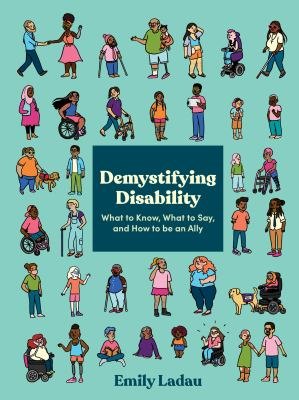
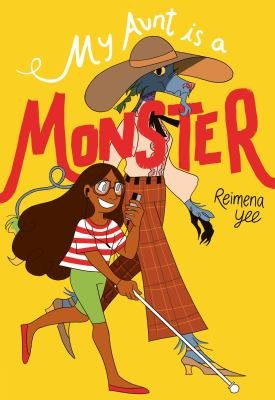
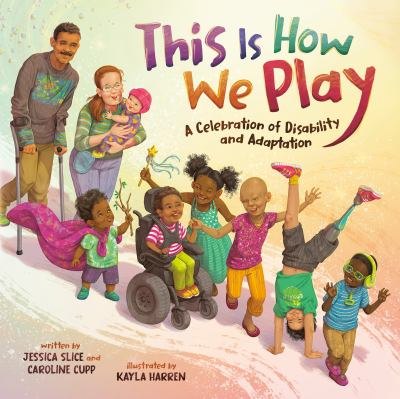
Here are some great books to help you get started this month!